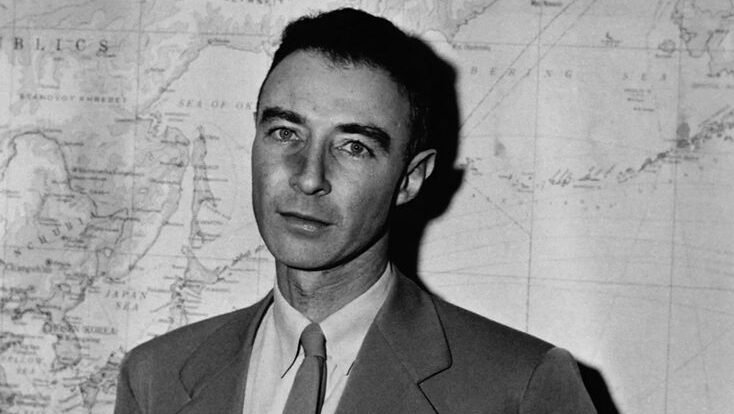
A Brilliant Mind Once Labeled “Too Emotional”
History remembers J. Robert Oppenheimer as the father of the atomic bomb, but early government reports claimed he was “emotionally unstable” and “too sensitive.” Officials feared he might struggle under pressure. These judgments ignored his complexity. His emotions strengthened his intellect and shaped his unique leadership style.
Oppenheimer loved poetry, philosophy, and Sanskrit literature. His emotional awareness fueled his curiosity and sharpened his sense of responsibility. These qualities later helped him unite brilliant scientists and guide them through difficult moral questions.
Chosen to Lead a Historic Scientific Mission
Despite doubts, Oppenheimer’s knowledge and communication skills impressed top physicists. When the United States launched the Manhattan Project, he became its scientific leader. This decision shocked officials who viewed him as inexperienced, but his peers saw his true potential.
At Los Alamos, he quickly proved his value. He motivated teams, solved complex problems, and created an environment where ideas flowed freely. His emotional strength helped scientists manage stress and ethical concerns. Under his guidance, they achieved the impossible: the creation of the first atomic weapon.
During the Trinity test, he remembered the Bhagavad Gita: “Now I am become Death, the destroyer of worlds.” His reaction showed the depth of his internal conflict—pride, fear, and responsibility merged into one unforgettable moment.
A Legacy Defined by Humanity and Vision
After the war, Oppenheimer warned leaders about nuclear dangers. His honesty cost him his security clearance, but time transformed his reputation. Today, he stands as a visionary who balanced scientific brilliance with emotional insight.
The Oppenheimer emotional journey proves that sensitivity does not weaken greatness. It deepens leadership, fuels innovation, and strengthens moral awareness. Oppenheimer was not perfect, but he was profoundly human, and that humanity shaped his lasting legacy.
